October 28, 2026
Can Dental Implants Get Cavities?
By @dominickdjer374
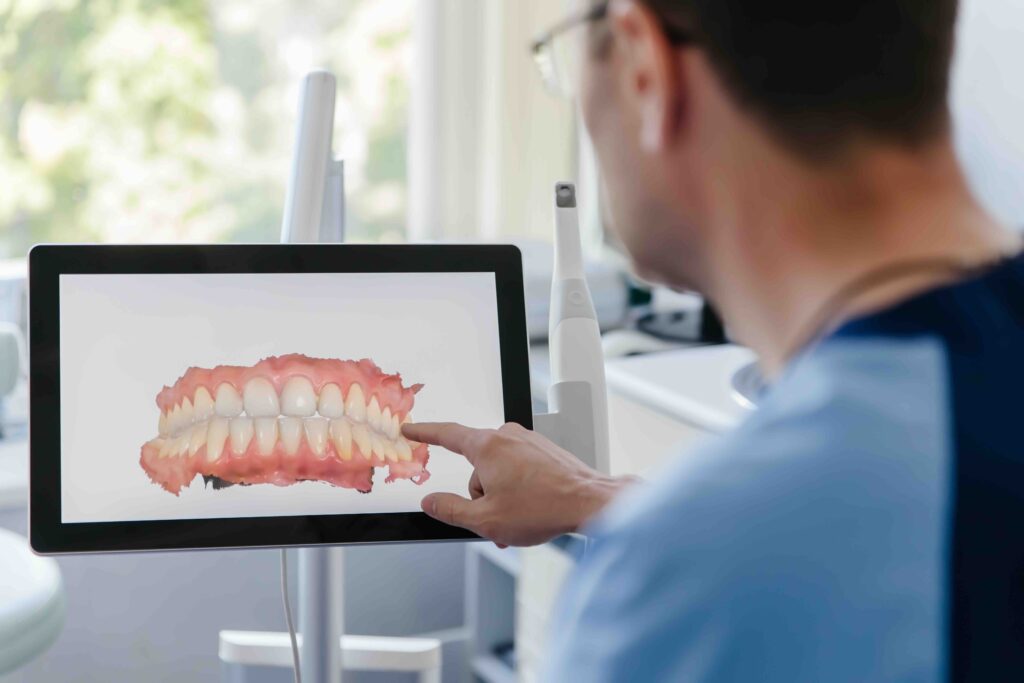
It is a fair question, and one that comes up often in dental offices: can dental implants get cavities?
The short answer is no. A dental implant itself cannot develop a cavity the way a natural tooth can. Cavities form when bacteria in the mouth feed on sugars and starches, produce acid, and gradually dissolve tooth enamel and dentin. A dental implant is made from materials such as titanium and ceramic. Those materials do not decay.
That answer, though, is only half the story. People hear “implants do not get cavities” and sometimes translate it into “implants do not need much care.” That is where problems begin. While the implant post and crown cannot rot like a natural tooth, the gum and bone around the implant can absolutely become diseased. In practice, that can be every bit as serious as a cavity, and in some cases more serious because it often starts quietly.
So if you have dental implants, or you are considering them, the better question is not just whether they can get cavities. The better question is what can go wrong with them, how those problems compare to tooth decay, and what daily habits actually keep implants healthy for the long term.
Why the confusion is so common
The confusion makes sense because an implant often looks and feels a lot like a real tooth. Once it is restored with a crown, many people forget there is an artificial root beneath it. They brush it, chew with it, and speak with it much like any other tooth. From the patient’s point of view, it seems reasonable to ask whether it can get the same disease process as a natural tooth.
Part of the confusion also comes from how dentists talk about risk. When someone has repeated cavities in natural teeth, implants can sound almost immune by comparison. A clinician may explain that the implant crown will not decay, which is true, but if that point is heard without the rest of the explanation, it can create a false sense of security.
I have seen this in real-life maintenance visits. A patient with excellent intentions skips flossing around the implant for months because, in their words, “it’s fake anyway.” Then the gums are puffy, plaque has hardened into calculus, and bleeding starts with a light touch. There is no cavity, but there is definitely trouble.
What a cavity actually is
A cavity is localized destruction of tooth structure caused by acid-producing bacteria. Natural teeth have enamel on the outside and dentin underneath. Once plaque bacteria sit on a tooth surface regularly, especially around sugary snacks or frequent sipping of sweet drinks, they create an acidic environment. That acid demineralizes enamel. Over time, the weak spot turns into a hole or soft area that dentists call caries, more commonly known as a cavity.
An implant does not have enamel or dentin. The implant root is usually titanium, placed into the jawbone. On top of that Dental Implants sits an abutment and a crown made from ceramic, porcelain, zirconia, metal, or a combination. None of those materials can be eaten away by cavity-causing acid the way a natural tooth can.
That is why the literal answer is no, dental implants do not get cavities.
What can happen to dental implants instead
The tissue around an implant can develop inflammation and infection. That process is not tooth decay, but it can still threaten the implant.
Two terms matter here. Peri-implant mucositis is inflammation in the soft tissue around the implant. Think of it as the implant version Dental Implants of gingivitis. The gums may look red, bleed during brushing, or feel tender, but the bone supporting the implant is still intact. If it is caught early, it is usually reversible with better cleaning and professional care.
Peri-implantitis is more serious. In this stage, inflammation is accompanied by bone loss around the implant. Once bone begins to shrink away, the implant can become less stable. In advanced cases, the implant may fail and need to be removed.
From a patient’s perspective, peri-implantitis can be more deceptive than a cavity. A cavity in a natural tooth often causes sensitivity or pain, especially when it gets deeper. Peri-implant disease may progress with little discomfort at first. That is why people can be surprised when an implant that “felt fine” suddenly has bleeding, a bad taste, swelling, or even mobility.
Why implants still need daily care
An implant crown may not decay, but plaque does not care whether it lands on enamel, ceramic, or metal. It sticks to all of them. Once plaque accumulates at the gumline, the surrounding tissue reacts. The body’s immune response starts the inflammation, and if the biofilm remains undisturbed, the process can extend deeper.
The area where the crown meets the gum is especially important. Food debris and plaque tend to collect there, particularly if the crown shape creates a tight or difficult-to-clean emergence profile. Some implant restorations are beautifully made but require more skill to clean than a natural tooth. If a patient has limited dexterity, arthritis, or crowded implant positioning, home care becomes even more critical.
There is also a structural difference between a natural tooth and an implant that matters. Natural teeth are attached to bone by the periodontal ligament, a specialized cushion of connective tissue. Implants do not have that ligament. They integrate directly with bone. The soft-tissue seal around an implant is effective, but it is not identical to the attachment around a natural tooth. For that reason, once inflammation gets under way, implants can be less forgiving than many people expect.
The crown cannot rot, but it can still have problems
Another point worth clarifying is that while the implant and crown do not get cavities, the restoration can still have non-cavity problems. Cement can be trapped under the gums if a cement-retained crown is not managed carefully. A screw can loosen. Ceramic can chip. The bite can be off, causing excess force. The crown margin can be difficult to clean if the shape is bulky.
These are not cavities, but they can create symptoms that patients interpret as “something is wrong with the implant.” And they are right, even if decay is not the cause.
A dentist evaluating an implant has to think beyond decay. The examination includes gum health, plaque levels, bleeding on probing, pocket depths, radiographic bone levels, crown fit, bite forces, and the patient’s ability to maintain the area. In other words, implant success is not just about the material surviving. It is about the whole system functioning well.
Signs that should not be ignored
Because implants do not decay, some patients delay treatment when symptoms appear. They assume it cannot be anything serious. That delay can be costly.
Watch for changes such as bleeding when brushing around the implant, swelling in the gum, bad breath localized to that area, a persistent bad taste, tenderness, pus, or a sensation that the crown feels different when biting. Mobility is a late and concerning sign. An implant should not feel loose. Sometimes the looseness is in the crown or abutment rather than the implant itself, but it still needs prompt attention.
Not every irritated implant is failing. Sometimes the issue is as simple as trapped food, poor flossing technique, or a bite adjustment that needs to be made. But there is no reliable way to sort that out at home. The earlier a problem is identified, the more conservative the solution usually is.
Who is at higher risk for implant problems
Not all implant patients carry the same risk. One person may have an implant that stays clean and stable for 20 years with routine maintenance. Another may struggle within a few years despite similar hardware. Biology and habits matter.
Smoking is a major risk factor. It affects healing, blood flow, and the body’s response to bacterial challenge. A history of gum disease also matters. If someone lost teeth because of periodontal disease, they often remain more vulnerable to inflammation around implants unless maintenance is excellent. Poorly controlled diabetes can increase risk as well. So can dry mouth, inconsistent dental visits, and heavy grinding or clenching.
There are also design and placement factors. An implant placed in an area that is hard to access with a toothbrush or floss will be harder to maintain. A bridge supported by implants can be wonderfully stable but may require special cleaning underneath. In the front of the mouth, cosmetic demands sometimes lead to contours that look ideal but leave less room for easy hygiene. Good implant dentistry always tries to balance appearance, function, and cleanability.
What good home care actually looks like
Most implant failures are not caused by a dramatic event. More often, they result from neglect that seems minor in the moment and significant over time. The basics matter more than fancy gadgets.
Brush thoroughly twice a day with a soft toothbrush. Pay attention to the gumline around the implant crown, not just the visible chewing surface. Clean between the implant and neighboring teeth every day. Depending on the shape of the space, that may mean floss, implant-specific floss, an interdental brush, or a water flosser as an adjunct. The best tool is the one that the patient can use consistently and correctly.
Technique matters. I have watched many patients “brush” an implant by skimming the tops of the teeth while missing the collar near the gums where inflammation starts. Slowing down by even 20 or 30 seconds for that area can make a visible difference at the next maintenance visit.
If you wear a night guard because you grind your teeth, use it as instructed. Excessive force does not cause cavities either, but it can contribute to mechanical complications and stress around the implant restoration.
Professional maintenance is not optional
Implants need regular professional follow-up. How often depends on the patient’s risk profile, but every six months is a common baseline, and many people benefit from three- or four-month intervals, especially if they have a history of gum disease or plaque control challenges.
At those visits, the goal is not just a polish. A proper implant maintenance appointment checks tissue health, examines how well the patient is cleaning, evaluates the bite, and compares radiographs over time when indicated. Early bone loss around an implant may be visible on X-rays before the patient notices anything.
There is also value in professional instrumentation and coaching. Implant surfaces and restorations should be cleaned with instruments appropriate for them. The details vary by office and by restoration type, but the principle is simple: maintain the implant thoroughly without damaging the surrounding structures.
Patients sometimes assume that if an implant feels strong, it must be healthy. Strength is not the same as health. A well-integrated implant can have active inflammation around it for a long time before becoming obviously loose.
How dentists treat inflammation around implants
Treatment depends on how advanced the problem is. If the issue is limited to soft-tissue inflammation without bone loss, the first step is usually improving plaque control and professionally debriding the area. Sometimes the solution is surprisingly straightforward once the patient learns the right cleaning method for that specific implant.
If there is deeper pocketing or bone loss, treatment becomes more complex. The dentist may need to remove contributing factors such as residual cement, adjust the crown contour, or refer to a periodontist. Some cases respond to non-surgical therapy, while others require surgical access to clean the implant surface and manage the lost bone. Outcomes vary, which is another reason prevention matters so much.
The important thing is that “no cavities” should never be confused with “no consequences.” A neglected implant can be difficult and expensive to save.
Common misunderstandings patients have
A few misconceptions show up repeatedly in practice, and clearing them up can prevent trouble.
The first is that implants are maintenance-free. They are not. They are resistant to decay, not resistant to plaque.
The second is that pain is the main warning sign. It often is not. Bleeding is a much earlier clue. If gums around an implant bleed every time you clean them, that is not normal.
The third is that all floss or all brushes work equally well around implants. They do not. The right tool depends on the spacing, crown shape, and whether the implant supports a single crown, a bridge, or a full arch restoration.
The fourth is that if a natural tooth next to the implant gets a cavity, the implant itself must be at risk of getting one too. What is really happening is that the mouth environment and hygiene pattern that led to decay in the natural tooth may also be creating inflammation around the implant. Different disease process, same neglected conditions.
How implants compare with natural teeth over the long run
This is where the conversation becomes more nuanced. Natural teeth are biologically remarkable. If they are healthy and restorable, preserving them is usually the first choice. They do, however, remain vulnerable to cavities, root decay, fractures, and periodontal disease.
Dental implants remove cavity risk for that one missing tooth replacement, but they do not outperform natural teeth in every category. They require surgery, adequate bone, skilled planning, and lifelong maintenance. They can fail biologically or mechanically. When they succeed, they can function beautifully for many years. When they are neglected, the complications can be difficult to reverse.
In real-world decision making, implants are excellent when a tooth is missing or truly hopeless. They are not a free pass from oral hygiene, and they are not a reason to give up on a salvageable natural tooth.
Questions worth asking before you get an implant
If you are considering an implant, ask your dentist or specialist how the final restoration will be cleaned. That may sound like a small question, but it reveals a lot about the planning. An implant should not only fit the bone and bite well, it should also be maintainable by the patient who has to live with it every day.
Ask whether the crown will be screw-retained or cement-retained, what maintenance schedule is recommended, and whether your history of gum disease, smoking, diabetes, or grinding changes the outlook. Honest implant discussions include those trade-offs.
It is also reasonable to ask to be shown exactly how to clean around the final restoration. A two-minute demonstration in the office can prevent years of trouble.
The practical answer most patients need
So, can dental implants get cavities?
No, not in the true sense of dental decay. The materials used in implants and implant crowns do not form cavities the way natural teeth do.
But that does not make implants invincible. The gum and bone around them can become inflamed and infected. The crown or components can develop mechanical issues. Food and plaque can still accumulate. And if disease progresses unchecked, the implant can fail.
That is why the most accurate way to think about dental implants is this: they trade one type of risk for another. You lose the risk of decay in that replaced tooth, but you still carry the risk of plaque-related inflammation, bone loss, and restorative complications. For many patients, that trade is absolutely worth it. Implants can restore chewing, appearance, speech, and confidence at a very high level. They just work best in mouths where maintenance is taken seriously.
If you already have an implant, treat it like a valuable investment, because it is. Brush it carefully, clean between it and the neighboring teeth every day, and keep your recall visits. If something feels off, do not wait for pain. Implants do not get cavities, but they do need respect.
Oaks Dental
5000 Parkway Calabasas Suite 308
Calabasas, CA 91302, United States
+1 818-431-2000
FAQ About Dental Implants
What is the downside of a dental implant?
Implants require surgery and a healing period that can last several months. Possible complications include infection, nerve or sinus injury, damage to nearby teeth and failure to bond with bone. Your dentist should assess your health, bone support and alternatives before recommending treatment.
What do dental implants typically cost?
There is no single price for every implant case. The number of teeth replaced, implant components, final restoration and any grafting or extractions affect the total. Request a written estimate covering every stage and confirm insurance benefits and out-of-pocket costs with the practice.
How long do tooth implants last?
An implant can provide long-term support and may last a lifetime with good oral hygiene and regular dental care, but this is not guaranteed. The crown or other restoration may need replacement sooner. Smoking, gum disease and some health conditions can reduce implant success.
❧